
Resurrection
Archival Practices to "Make Alive" the Dead


BY CHRISTINA NAFZIGER
Can an object truly bring back the dead? Whether in a novel, a movie, or in your living room, a seance typically requires an item from the deceased to be present in order to reach across and into the spirit world to contact the dead. It is often a lock of hair, a piece of clothing, a favorite toy, or a letter the person wrote. In every instance, the hands of the dead must have touched it. This is what gives them the power to become a conduit connecting our two worlds.
Archives serve as systems of intentional preservation for these very objects, albeit for a different purpose—or is it? When you wear the necklace that your Mammaw used to wear, do you not feel her presence? Does holding the photograph of your mother not conjure a sudden rush of memories? The smell of her hair, the sound of her voice? And if these items do in fact bring them back, then what is our responsibility to them? What timelines, portals, and possibilities open up when they are not just preserved, but utilized?
In its most basic form, archives are systems that contain remnants of the past, materials made, used, or kept by those who, oftentimes, are no longer living. They are windows into the past. Through preservation and responsible stewardship, those who keep these archival materials allow them to stay amongst the living. But what if this window was a door? Can the life attached to an object also be preserved? And I don’t mean in a back-from-the-dead zombie way—I don’t even mean in a ghostly way. Instead, I’m approaching these archival objects in a holy way, used to conjure back our loved ones as resurrection. Like the Biblical story that we may all be familiar with, this ‘resurrection’ of life through these objects are sacred. They restore rather than make alive a corpse. Through the hands and methods of artists and writers, such as Maggie Nelson, Bryana Bibbs, and Jenny Fine, perhaps the act of creation can transmute these materials towards a resurrection.
In 1969, Jane Mixer was murdered. She left behind journals, poetry, and, in the wake of her death, a slew of news articles and material evidence. Thirty-six years later, writer, poet, and cultural critic Maggie Nelson—Jane’s niece—published the book Jane: A Murder (2005). Its pages hold materials from Jane’s life, including excerpts from her diary, lines of her poetry, and snippets of newspaper articles that mention her. The book itself is a prose-collage of these materials that remixes literary form through Nelson’s prose as she oscillates back and forth between Jane’s thoughts and her own. Having never had the chance to meet her mom’s sister prior to her death—and not being able to talk about it with her mother due to grief and the sensitive nature of Jane’s passing—this book was a way for Nelson to reach out to her aunt, unearth her words from her diaries, and engage with them in order to learn more about who she was. Jane’s words are the material, and the writing is the conduit. Past and present folds in on itself within the pages of Jane, forming a thread of connection between Jane and Nelson, one that can only exist through the process of writing. When brought out of the dusty boxes that hold Jane’s old belongings, something new is formed and brought into the light. (Notably, the materials brought together in this book were the impetus to Jane’s cold case reopening, which led to the eventual conviction of her killer.)
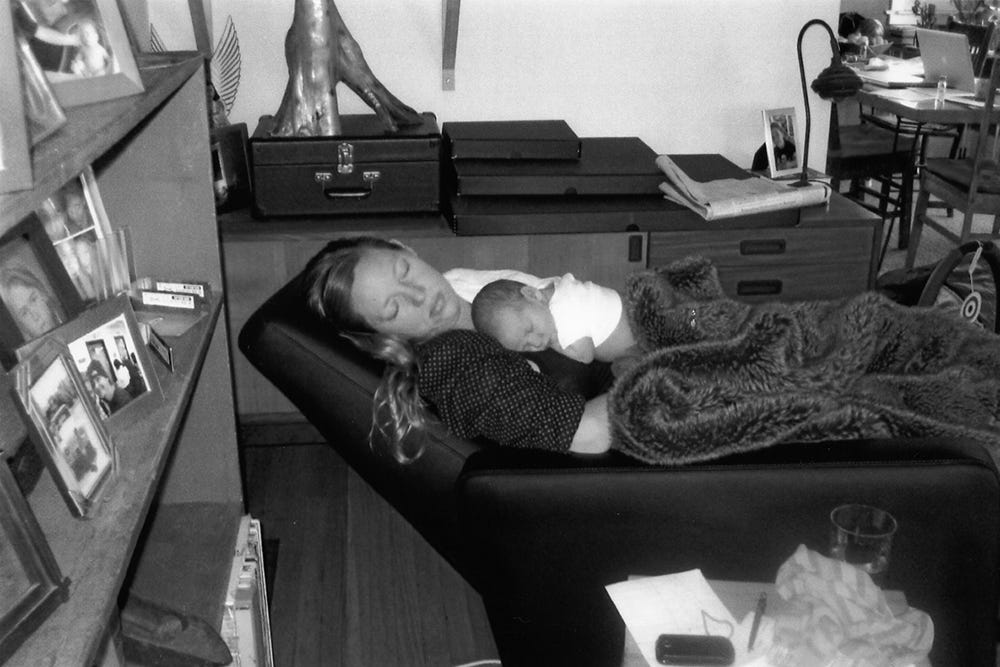
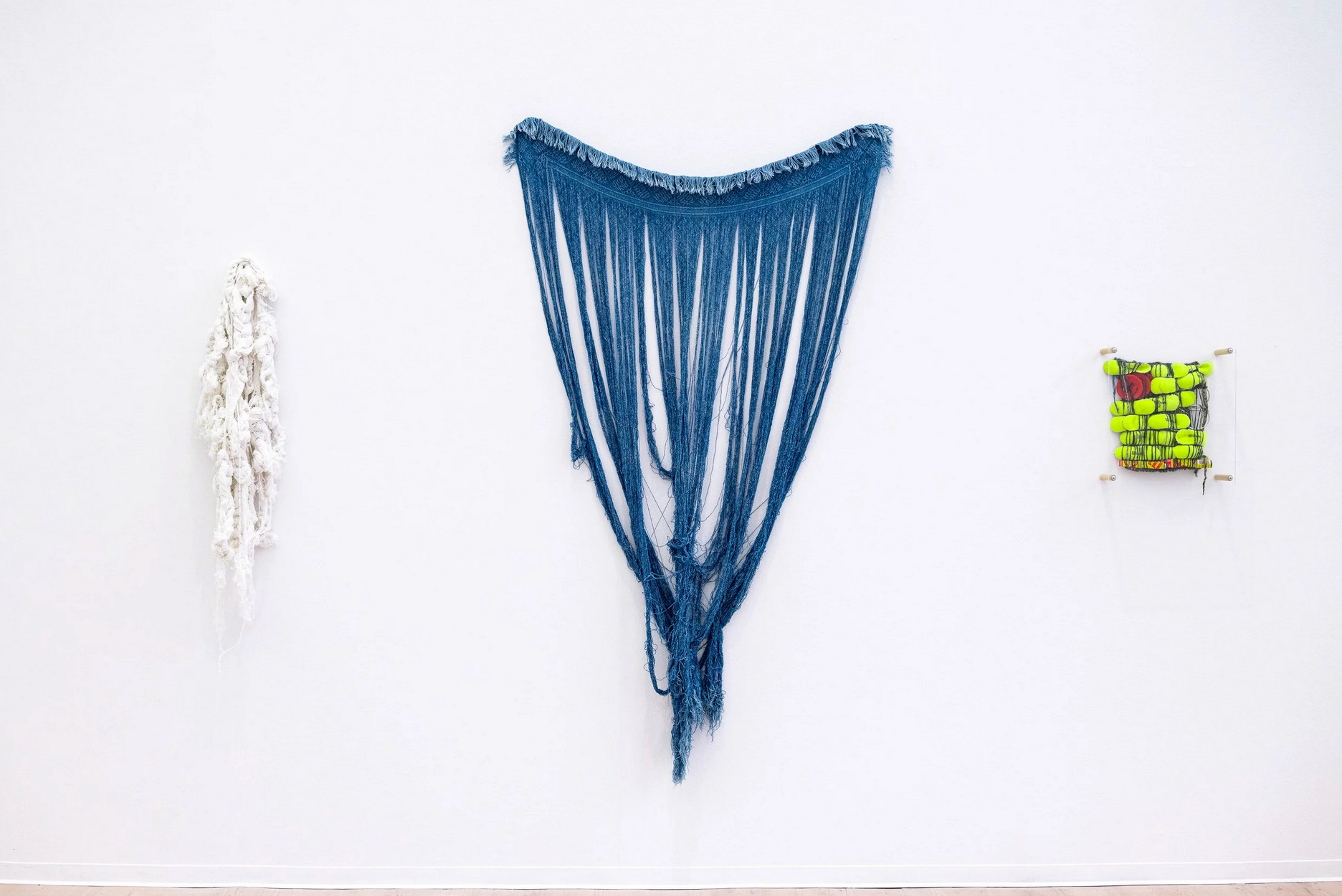
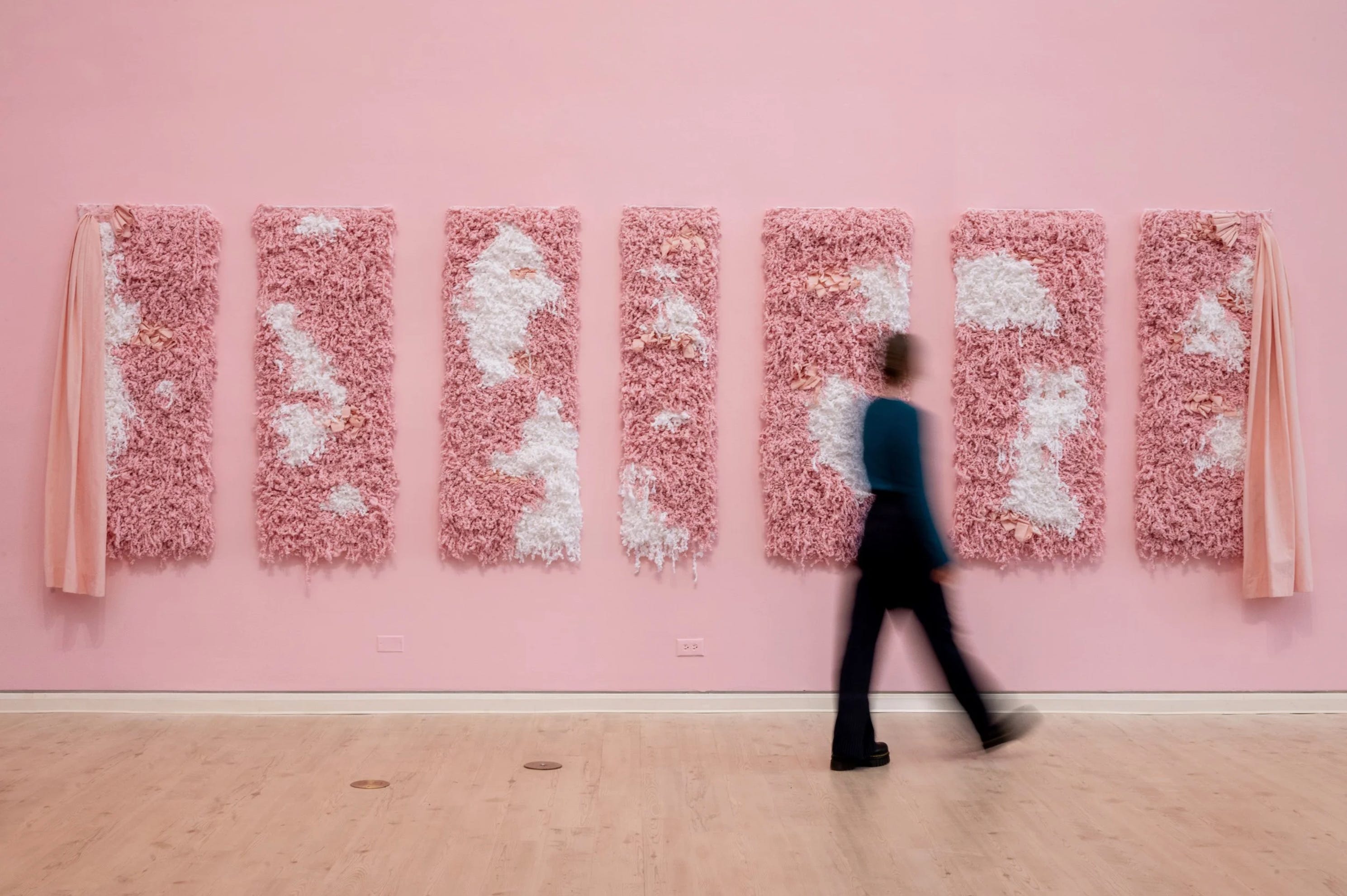
In 2023 and 2024, Chicago artist Bryana Bibbs lost both of her grandparents. That following year, in 2025, her solo exhibition two-hundred and fifty-one days at the Chicago Cultural Center chronicles the time spent with her grandparents during these two years through a series of new works that include weavings, works on paper, and found objects. Literally woven within Bibbs’s work, these found objects are not insignificant. They are playing cards, an uno score card, tennis balls. They are the everyday objects once used by her grandparents, each cut, stretched, bent, and woven into wall hangings made by the artist. By spending time with these objects once belonging to her grandparents, Bibbs faces her grief head on, resurrecting each memory attached to each object in remembrance. In relation to the archive, some might see this as a conundrum: how can you preserve an object while taking it apart? However manipulated they become, each object is restored and made anew through the weaving process. Bibbs’s hands transform the objects into meditations on grief while at the same time memorializing them as sacred objects in and of themselves. They now will not be tossed, set aside, or stashed away somewhere. They are embedded within Bibbs’s practice, within the gesture and repetition of weaving, within the walls of the gallery it is displayed, and within the minds eye of each viewer long after the show comes down. Their reverberation extends like an echo, living on among the living.
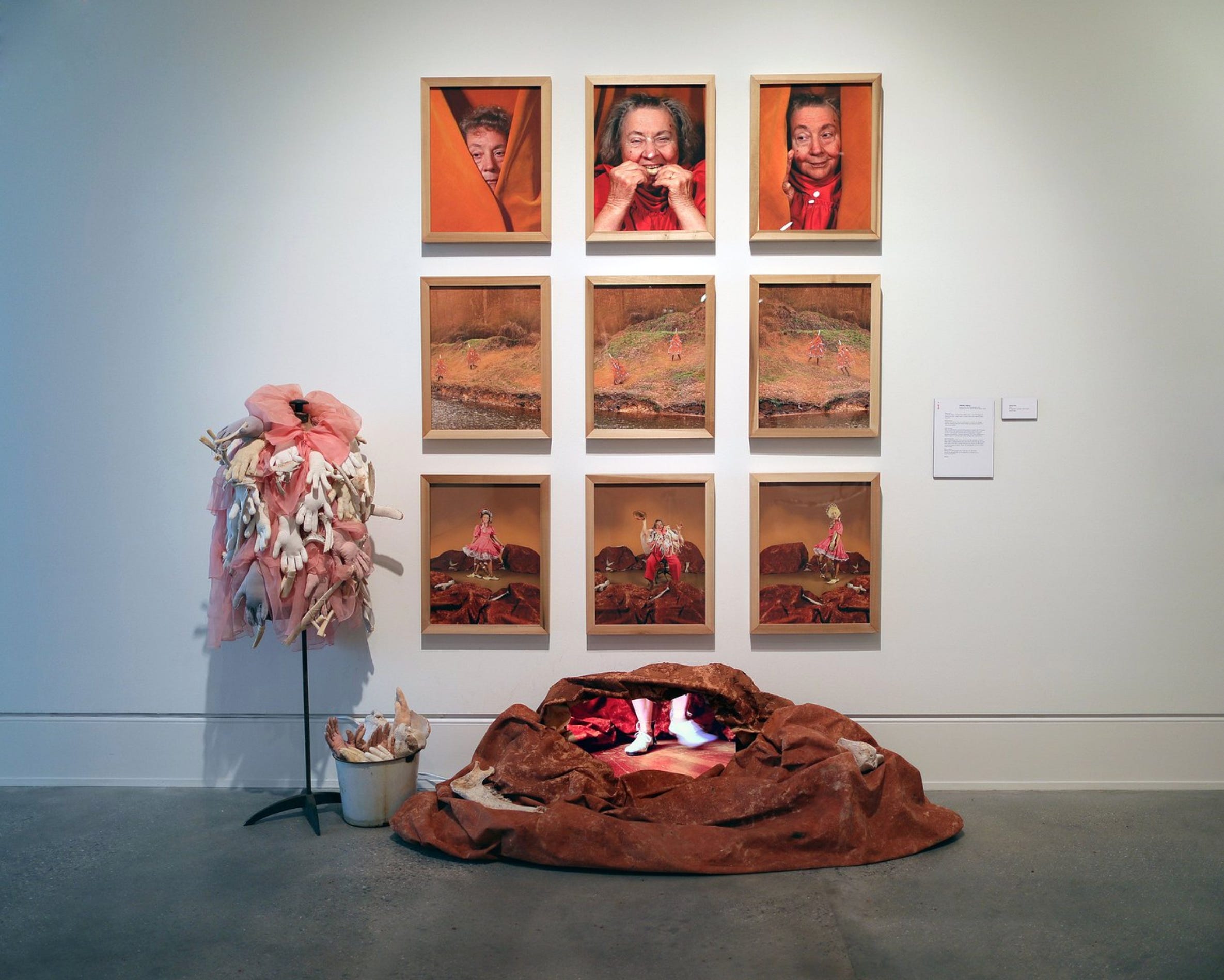
In 2018, Tennessee-based multidisciplinary artist Jenny Fine began her series In Unison, which she describes as an ongoing collaboration with her deceased grandmother through a series of performances and installation works. Unlike Nelson and Gibbs, who weave items and words once used by their late family members into their works, Fine uses her grandmother’s physical likeness. Like a life-sized paper doll, Fine physically wears a photograph of her grandmother on her back while clogging, an activity encouraged by her grandmother that connects the artist to her roots in Appalachia. Through In Unison, and with these gestures, Fine is both herself and not herself, becoming simultaneously herself and her grandmother. She is within her own body, yet transforms by animating the “body” of one who has passed on. This reanimation is not a simple raising of the dead. It is a reforming of a person who is now missed; a rejoining of roots, of a connection that cannot be broken by death. These gestures form a new archive, one embodied in movement and motion, encapsulated within one person’s being. Perhaps there will be a moment in Fine’s practice when the photograph is no longer needed, as the memory stored in the body is capable of holding the archive as well, free of the constraints of space, time, and objecthood.


Archiving is the preservation of objects once possessed. However, it is also the preservation of ideas, thoughts, joy, love, and everything else that is conjured when a memory of a person surfaces. By reaching into the archive and back into our histories, we grab hold of what we know and cherish and use the act of creation—whether it be through writing, weaving, or movement—to bring the dead into the world of the living. Not to make alive what once was dead, but to restore and remake. To resurrect and awaken the spirit of those we love. Perhaps the same can be done to our own archive, our own objects transformed from capitalist waste to a relic of memory through the act of love, remade by the hands that touch them.
 | A guest post by
|